

Stories that point back to him.
Scripture in this message: Jeremiah 17:5-8
This is the message as Pastor Kyle wrote it, lightly edited so it reads clearly on the page. It is his prepared text, so it may differ here and there from what he said on Sunday.
The message
Well church good morning.
One thing that I absolutely love about our God is that I know that he is a creative being. We can see that in creation itself, obviously. But I also think that God enjoys it when we create. When we make beautiful art and all sorts of different forms. I would even include the creativity that we use for our normal day-to-day jobs. But for what is commonly known as the creative arts world, that would include music to film and television to physical media like paintings or even when we create words on a page to tell a story.
I mean, we just finished a series on the parables that Jesus told. Jesus himself used creative storytelling to communicate a message to his followers. Or at least those who had an ear to hear. Jesus himself would specifically tell stories that had an underlying message about them, but under the disguise of something that seemed irrelevant. Take the good Samaritan story, for instance. Jesus was having a conversation about what law was most important to follow, and that was to love the Lord your God with all your heart, soul, mind, and strength. And then to love your neighbor as yourself. But then, in describing who the neighbor was, Jesus tells the elaborate story revealing that even the person that we despise the most is someone that we are to love.
Who C.S. Lewis Was and the World of Narnia
And one of these creative people that we have had the chance to study for a while now is CS Lewis. We've taken a lot of time to explore some of his philosophical and theological writings but when you say the name, CS Lewis, there are two books that you will think of. Or a book and a series. You might think of his book Mere Christianity, especially if you grew up as a believer, but the other, that even non-Christian people know and love, is his fantasy series called The Chronicles of Narnia.
Now, usually, when someone mentions the Chronicles of Narnia, most of the time they only think of the story of the lion, the witch and the wardrobe. But this series goes far beyond just the one book.
The Narnia series was originally published between the years of 1950 and 1956. It's known as a portal fantasy series which is some kind of fantasy fiction that's written where the main characters move through some sort of portal to get into the land that they spend most of their time interacting with. The wardrobe in The Lion The Witch and the Wardrobe being that “portal”.
Speaking of Lewis's creativity, he had originally set out to write these books so that children can enjoy some kind of adventure story while adults reading alongside would also discover deep philosophical and theological themes.
Now, if you are unfamiliar with this series, let me set the table if you will. Narnia is this a fantasy world that this entire series is set in. It's filled with talking animals, other mythical beasts, and various forms of magic that we see carried out in different ways. The series itself covers the entire existence of Narnia. We get to see the creation of as well as the destruction of Narnia as a whole. And with each book, there are different children that are brought into Narnia through some magical portal that play Central roles in its unfolding history. Often times these kids are called up pond by The Great Aslan to help him protect Narnia from evil.
Now Aslan is the only character that appears in all seven of the Narnia books. He is represented by a talking lion who is known as the king of beasts, the son of the Emperor over the Sea, and the king above all high kings of Narnia.
Even though there are seven individual books that make up the series, all having their own specific themes that they address, there is one central theme that bridges itself across the entire series. That is, learning to trust Aslan. Will these characters trust Aslan even when they don't fully understand what he's doing?
Now, how does that get accomplished? How do we see that question played out across seven different books?
Now we are gonna do this by summarizing each of the seven books. And you might be thinking, "Kyle that's a lot of books." To which yes you're right, but I would ask that you bear with me on this because there is a purpose. Trust me as we learn what it means to trust Aslan in these books.
The Magician's Nephew and the Wardrobe
I wanna start with his book, called The Magician’s Nephew. This was not the first book that was published in this series; it was actually the sixth book published in 1955, and is a prequel. It is set before any of the other books are supposed to happen and acts like the origin story of Narnia. and, fun fact, it is currently being made into a movie that is set to release here in February of 2027.
In this book, it follows two children, Digory and Polly. They're both tricked by Digory’s uncle Andrew, who is an amateur magician, into using magic to attempt to travel between different worlds. Within their travels, they happen to awaken an evil queen named Jadis while they're in the dying world of Charn. And they awaken her right before they witness a special lion using song to bring the world of Narnia into existence. Queen Jadis ends up following the boys into London and then into Narnia. During their adventures, Digory finds out that his mom is dying back home. Now, instead of giving him some kind of resource to help save his mom, Aslan ends up, sending Digory on a separate task to retrieve a magical apple and plant it in Narnia instead of using it to save his mom. On this specific quest, Queen Jadis then tempts Digory to actually take that magical apple and use it for himself, saving his mom.
In this book, there's multiple themes that play out. We get to see creation, specifically creation, being an act of joy, and the fact that there's beauty in the universe from the very beginning. We get to see free will, temptation, and even obedience. But to tie it in to the rest of the series, Digory is faced with the question of if he is going to trust Aslan and obey what he was asked, even when it seems to cost him his mother's life?
So that's The Magician’s Nephew. The next book that we're gonna talk about and the first book that was actually published in the series in 1950 and that is The Lion, the Witch, and the Wardrobe.
Now this book is probably the one that most people are familiar with, even non-Christian people are familiar with this book. It was made into an animated movie in 1979, part of a BBC Television series in 1988, and later into a live-action film in 2005.
The story centers around four siblings: Peter, Susan, Edmund, and Lucy Pevensie. They are unfortunately relocated to a large, old, country house, following a wartime evacuation from where they were living. While playing Lucy discovers this wardrobe and a spare room that transports her into the magical land of Narnia. She ends up, bringing the rest of her siblings there with her, and they noticed that it is trapped in an endless winter at the hand of the white witch, who is Queen Jadis from The Magician’s Nephew. From the people they meet, they hear about this old prophecy that was being fulfilled by their presence in Narnia. The white witch, also knowing this prophecy, tries to make sure the prophecy isn't fulfilled and deceives Edmund with some Turkish delights with a promise of power.
This leads to a multitude of problems where later on we see Aslan come to sacrifice himself in the place of Edmund, saving Edmund's life by giving up his own, but by the power of “deeper magic from before the dawn of time” Aslan is brought back to life, defeating the evil white witch. At the end of the story and after all of that, we see the four Pevencies be crowned kings and queens of Narnia.
We see themes of redemption, forgiveness, sacrifice, and even hope. But the way that this story ties into the rest of that theme like we've been talking about is by asking the question of Will Edmund accept grace, and will the others trust in Aslan's mysterious plan?
The Horse and His Boy, Caspian, and the Dawn Treader
The next book we're going to cover is called The Horse and His Boy. And this book is actually the fifth book that was written in the Narnia series and was published in 1954. If you couldn't tell, I'm going in Narnia's chronological order, not the publication order.
But this book takes place during the time the Pevensies are ruling as kings and queens over Narnia. It follows a young man named Shasta who escapes slavery with his talking horse named Bree. As there are escaping, they face a multitude of different trials, but in their journey, they also uncover a specific plot from the person who enslaved them that was planning on overthrowing the kingdom of Archenland. Shasta then decides to go and try to warn the king of Archenland of this impending strike. During his entire journey with Bree, Shasta is struggling with a couple things: if Aslan is even around at all and believing that he is actually worthless. Where was Aslan while he was being chased, when he needed protection and comfort, and when he needed guidance? Does his life have any meaning? That is, until he gets to the kingdom where he finds out that he is actually the lost Prince Cor.
In this book, we see themes of Providence, identity, and courage. And the way that that ties into the rest of the series is by asking the questions of can Shasta believe that his painful experiences have an intended purpose? Can he trust in Aslan to comfort, protect, and guide him?
The next book in the series and the second book published in 1951 is called Prince Caspian. It was originally released as Prince Caspian: The Return to Narnia. Now, in publication, this is coming right after all of the events of the wardrobe book, and we see the Pevensies have gone back to their home and England at the end of Wardrobe. The book, Prince Caspian, then picks up a year later where the Pevensie kids are magically whisked away back to Narnia while in a British railway station. And that would be a year according to the Pevensies in the normal world. That’s an important distinction because a year to them was actually 1300 Narnian years, and a lot has changed.
Old Narnia was practically gone. Talking animals were pretty much seen as a myth where once they were a mainstay and the rest of society, people had even forgotten who Aslan was, and a corrupt man, King Miraz, had taken the throne of Narnia after killing his brother, King Caspian IX. King Caspian IX’s son, Prince Caspian X, later works with the Pevensies to gather up faithful Narnians and work to overthrow his uncle. During this story, we see Aslan showing himself and directly speaking to only Lucy for a long time before anyone else actually sees him.
On top of themes, like remembering, truth, restoration, and faith, we see this main overarching theme play out by asking: will Lucy follow Aslan and trust Aslan even when no one else sees him?
Up next, we have The Voyage of the Dawn Treader. And this is probably my favorite title out of the bunch. It just sounds so epic. This book was the third published out of the seven back in 1952.
In this book, the two eldest Pevensies are away, one is at school and the other is traveling around America. Now the two youngest siblings, Lucy and Edmund, along with their cousin Eustace, are drawn to Narnia through a painting that they see of a ship at sea. After coming through the portal of this painting, they land in the middle of the sea next to the ship that's named the Dawn Treader. They're picked up and brought onto the ship by now king Caspian X and captain of the Dawn Treader, Lord Drinian.
The three kids find out that this ship has set out to accomplish what Caspian promised he would do during his coronation and that was to go and find the seven lost lords of Narnia. With each island that they go and visit, there is a different lesson that they learn and the central theme that we see play out centers around Eustace, who ends up turning into a dragon because of his own greed. After this physical transformation, Eustace tries to take the dragon scales off himself finding out that it's only Aslan who can take them off for him. And this transformation back to being normal is a painful experience for him but once that's done, there's a genuine difference. Not a perfect change but one that is gradual.
In this story, we see major themes of transformation, sanctification, and asking the question of if Eustace can trust and allow Aslan to change him even when it hurts?
The Silver Chair and The Last Battle
Alright almost done. The next book, and the fourth one published in 1953, is called The Silver Chair.
We are now decades past Dawn Treader and Caspian X is now super old and his son Prince Rilian, has gone missing. Aslan brings in Eustace and one of his classmates, Jill, to come and help track down and bring Rilian home. As they begin their journey, Aslan gives Jill four signs that she needs to remember when finding Prince Rilian. After receiving these signs, they begin their quest, meeting a “marsh-wiggle” named Puddleglum, who becomes their guide. Along the way, Jill and Eustace repeatedly forget or even misunderstand what the signs are and what they mean. As they are getting closer, they come into contact with the Lady of the Green Kirtle who uses deception and even gaslighting to try to trick and deceive Eustace and Jill and Puddleglum. But Puddleglum himself chooses loyalty to Aslan over the uncertainty of his existence. They end up, accomplishing the task of rescuing Prince Rilian and getting him home to King Caspian. Caspian was then able to impart a blessing over his son and soon died after, resulting in Prince Rilian being crowned king.
In this book, we observed themes of perseverance, faith, despite doubt, and even spiritual warfare, all while being asked the question of whether Jill and Puddleglum will hold to and trust the truth of Aslan's existence, even when deception feels more convincing?
That leads us to our seventh and final book, The Last Battle. It was published in 1956 and takes place some 200 Narnian years after The Silver Chair.
In this book, we see a greedy ape named Shift, who persuades a donkey named Puzzle to wear a lion’s skin and introduce himself as Aslan. Shift persuades Puzzle to wear this disguise, and then convince people to cut down the trees of the surrounding forests in Narnia for lumber, pocketing all of the profit. He does this by making Puzzle remain silent, standing there as Aslan while Shift acts as his mouthpiece, saying whatever he wants. Anyone who questions what is going on is led to this large stable where they are stealthily murdered.
Now somewhere else in Narnia, King Tirian, a descendant of Caspian X, sees two people that are abusing other Narnians and, out of his own righteous anger, goes and kills these two people. In his own remorse, he ends up, reporting himself to who he thinks is Aslan and for his punishment, he ends up tied to a tree where he's able to notice and recognize that what is happening isn't right and that this isn't the real Aslan.
He calls out to the real Aslan who ends up sending Eustace and Jill to come and help rescue him. And again, this is able to work because time in Narnia moves faster than time in the real world. So Eustace and Jill are still young. Eventually, a huge battle breaks out between two different sides, those that follow Shift and the fake Aslan, and those that want to follow the real Aslan. King Tirian ends up finding himself victorious and asks Aslan to heal Narnia. But instead of bringing healing to the land, it's destroyed due to the nature of evil that has found itself rampant. But instead of destroying everyone and everything and starting over, Aslan takes those that are faithful to Narnia and takes them to what he calls Aslan's country, where they are told to go “further up and further in” to this new land as the old Narnia is consumed.
On top of themes of discernment, judgment, and even eternal life, we see the question of will the faithful recognize and trust the true Aslan amidst convincing counterfeits?
And that's the series. That's Narnia. In every single book there is the question of trust and specifically a trust in Aslan and his plan.
Reflections of Scripture, Not Strict Allegory
Don't admit that there is a lot to impact with an each single book, but there's also something to keep in mind as well in regards to the series itself. Lewis said that he wasn't attempting to just write a strict allegory of or symbolism of scripture unlike something like The Pilgrim’s Progress by John Bunyan. Instead, what caused Lewis to write this series was asking the question, "what if the son of God entered a world of talking animals just as he entered ours?”
And that question itself provides deep, theological, and philosophical conversations that we could spend plenty of time thinking through. Even though it wasn't his intention to create a direct allegory, there is still a substantial theological presence within the story of Narnia as a whole. And you can see reflections of scripture and Christian life within these books.
When you take a look at The Magician’s Nephew, there are some obvious echoes of the book of Genesis. Especially when you take the creation of the world into account. In that book we see Aslan singing Narnia into existence, echoing the fact that God used his voice in the creation of our world.
In The Lion, the Witch and the Wardrobe, we see reflections of the gospels specifically in Christ’s sacrificial death and resurrection.
In books like Prince Caspian and The Silver Chair, we get to read and explore concepts of living out a life of faith and having perseverance within that faith.
A book like The Voyage of the Dawn Treader explicitly portrays spiritual growth and transformation, and even more specifically, a transformation that can only happen through God.
And then finally, a book like The Last Battle parallels the themes of the book of Revelation, including judgment and the renewal of creation.
Within this series, we see the books move from creation to the fall to redemption even to discipleship and perseverance, and then to final restoration all under the concept of can we trust Aslan? Can we trust God?
When you really think about it, this is a conversation that we even have today, in 2026. We are still learning what it means to have faith in God, we are still wondering if we can trust God, we still struggle with our doubt, needing transformation of the heart that only God can give. We are currently living out the same thematic journey that Lewis wrote about in his Narnia series.
Which is also why I wanted to include every single book. Because the story was incomplete with just the one. There would be good things to learn and it would be an exciting read, but you wouldn't be able to see the fullness of the story unfold with just one of the books.
And honestly, the same goes for our relationship with the Bible. Our understanding of God is incomplete if we don't take the time to attempt to understand and read the words of the Bible in its entirety. From start to finish, we get to see the character of God and his plan for humanity.
Let's take that same breakdown that I just went through with the Narnia books but now through scripture.
From Genesis to the Gospels: Where We Put Our Trust
In the Narnia series, we start by seeing the themes of creation, temptation, and obedience within the book, The Magician’s Nephew. For us, and our understanding of scripture, we have that at the very beginning in Genesis and throughout the Old Testament.
In Genesis chapters 1 and 2, we get to read about the creation story. With each thing, God created it says, "and God said, ” let there be light. "and God said, ” let there be water. "and God said, ” put some animals all around there. "and God said, ” "and God said, ” using his voice, God spoke into existence the world around us. In Narnia, Aslan son, the world into existence creating its beauty.
And Genesis chapter 3, we get to read about the temptation of the serpent to Adam and Eve in the garden. That ultimately led to the fall of man and their relationship and grace from God. That same temptation is reflected in Queen Jadis, trying to convince Digory to satisfy himself for the sake of his mom rather than obedience to Aslan.
In the book of Exodus, after the people crossed the Red Sea and into the wilderness, they moved when God did. They stopped when God did. There was a need to trust in his guidance to the promised land.
“This is what the Lord says: “Cursed is the one who trusts in man, who draws strength from mere flesh and whose heart turns away from the Lord. That person will be like a bush in the wastelands; they will not see prosperity when it comes. They will dwell in the parched places of the desert, in a salt land where no one lives. “But blessed is the one who trusts in the Lord, whose confidence is in him. They will be like a tree planted by the water that sends out its roots by the stream. It does not fear when heat comes; its leaves are always green. It has no worries in a year of drought and never fails to bear fruit.””
Jeremiah 17:5-8
In the same way that Digory needed to trust the words of Aslan to plant the apple where he needed to instead of going to use it to save his mom, we ourselves need to place our trust in God and his word over the word of man. And that is so difficult and it takes time to figure out. But we need to be like these trees planted by the water with strong roots so that way we can stand firm in the midst of trial.
We also have the gospels and I think, if I were to pick a theme verse for the four gospels, it would be John 3:16-18.
“16 For God so loved the world that he gave his one and only Son, that whoever believes in him shall not perish but have eternal life. 17 For God did not send his Son into the world to condemn the world, but to save the world through him. 18 Whoever believes in him is not condemned, but whoever does not believe stands condemned already because they have not believed in the name of God’s one and only Son.”
John 3:16-18
The Gospels, all four of them, give us the depiction and story of Jesus's life and ministry on earth. They show us the fact that God came down himself as Jesus to be the final atoning sacrifice for his creation. But he didn't come to destroy the world, but instead his goal was to save people. And so those who are faithful to God, do not stand condemned. And those who stand in opposition to God do.
The story of The Lion, the Witch and the Wardrobe is a beautiful reflection of that same sacrificial love that God has for his creation through the image of Aslan being willing to die on behalf of someone else. And not just dying, but coming back to life, conquering the evil that was before them.
Perseverance and the Transformation Only God Can Do
But the story doesn't end there. All throughout scripture, we also get to see explanations of how to live out our life of faith and how to persevere no matter what may happen. Two examples of that are James 1:2-4 and Romans 5:3-5. Both saying similar things.
“2 Consider it pure joy, my brothers and sisters, whenever you face trials of many kinds, 3 because you know that the testing of your faith produces perseverance. 4 Let perseverance finish its work so that you may be mature and complete, not lacking anything.”
James 1:2-4
“3 Not only so, but we also glory in our sufferings, because we know that suffering produces perseverance; 4 perseverance, character; and character, hope. 5 And hope does not put us to shame, because God’s love has been poured out into our hearts through the Holy Spirit, who has been given to us.”
Romans 5:3-5
There has never been a guarantee in scripture that life would be easy. We know that there will be hardship and suffering that we may face. But we can have the assurance that as we continue to push through, relying on the strength given to us by God, that will produce something within us. Something that only God can do. Both of these scriptures show us that as we live our live, trusting in God and persevering through our suffering that we will have a hope that we know we can trust him. And that Hope is in God and his Spirit and the work of Jesus on the cross.
In books like The Horse and His Boy, we see the perseverance through the mini hardships that Shasta endured in order to share the news of the coming attack to the king of Archenland. With every step he needed to persevere and trust that he can get through it. Ultimately, he came to understand his identity as the son of the king rather than some lost soul.
In The Silver Chair, we see the characters persevere through their own doubt, trusting in Aslan, his existence, and the fact that they would accomplish their goal.
But in scripture, it doesn't just stop at perseverance, God also instructs us in transformation that comes through him alone.
“2 Do not conform to the pattern of this world, but be transformed by the renewing of your mind. Then you will be able to test and approve what God’s will is, his good, pleasing and perfect will.”
Romans 12:2
Eustace ended up getting transformed by his own greed. It turned him into something that he hated, and he couldn't get rid of it on his own. He needed Aslan to remove the scales for him. We also get to see that it didn't make him perfect by any means, but there is a distinctive change that happened after his new transformation.
We cannot look like the rest of the world, but the only way that we can accomplish that is by our mind changing. We cannot just change the habits and the actions that we do, but our mind has to be changed at a foundational level. And when we finally allow God to change our mind and our habits for us, then there will be a noticeable difference. There should be a noticeable difference and who we are and how we act. As scripture tells us we are not of this world and so we shouldn't look like it.
Judgment and the Renewal of All Things
And finally, we get to see this final battle, judgment, and even renewal played out in the book of Revelation.
“7 When the thousand years are over, Satan will be released from his prison 8 and will go out to deceive the nations in the four corners of the earth, Gog and Magog, and to gather them for battle. In number they are like the sand on the seashore. 9 They marched across the breadth of the earth and surrounded the camp of God’s people, the city he loves. But fire came down from heaven and devoured them.”
Revelation 20:7-9
Scripture tells us of an actual battle that will be happening at Armageddon, where we get to see good finally conquer the evil of the world, conquering Satan himself. And Lewis shows us that in The Last Battle, where there is this final conflict between those that are faithful to Aslan and Narnia and those that are not.
“1 Then the angel showed me the river of the water of life, as clear as crystal, flowing from the throne of God and of the Lamb 2 down the middle of the great street of the city. On each side of the river stood the tree of life, bearing twelve crops of fruit, yielding its fruit every month. And the leaves of the tree are for the healing of the nations. 3 No longer will there be any curse. The throne of God and of the Lamb will be in the city, and his servants will serve him. 4 They will see his face, and his name will be on their foreheads. 5 There will be no more night. They will not need the light of a lamp or the light of the sun, for the Lord God will give them light. And they will reign for ever and ever.”
Revelation 22:1-5
This is the final picture of the renewal of creation itself. There will be a new heaven and a new earth that is brought down, and Jesus himself will bring those of us who are faithful to him, to live in for eternity. That is the eventual hope, and the end goal is eternity with God with no suffering. That is what's promised to us.
That is what is shown by Aslan calling the faithful further up and further in, into his own country at the end of the series.
The Challenge: Can We Trust God
I love that there are some incredibly smart and creative people who can give us entertainment that reflects the truth of scripture. I love that God can use creative mediums, that we interact with on a regular basis, to point us back to him.
But if there's anything that you can leave here today, knowing, it's not how awesome of an author and creative mind that CS Lewis was. It’s not the cool titles and characters of all seven of these books.
Like I said already, the main question that is asked in the series is the same question that you and I and everyone on this earth will face in our lifetime: can we trust God?
The answer to that is yes. We can trust the creator of the universe. We can trust the one who is the same yesterday, today, and will be the same. We can trust that he will help us through our life, maybe not making it easier, but producing in us a steadfastness and a hope of a life that is to come. That hope and trust is in a living and breathing God. He did not stay dead and now lives within us through the Holy Spirit. And the beautiful thing is that it is never too late for us to place our faith and hope and trust in him. The same living God who conquered sin and death.
I don't know where any of you are in your relationship with the Lord, but please be encouraged to know that there is a God in heaven who knows you by name and wants to have a relationship with you. And it is up to you to allow him to transform your life and change your heart and mind to look more like him. So today be the day that you put your hope and trust in him.
I'm going to pray a simple prayer and if you have not yet placed your faith in Jesus, I would ask that you pray this along with me.
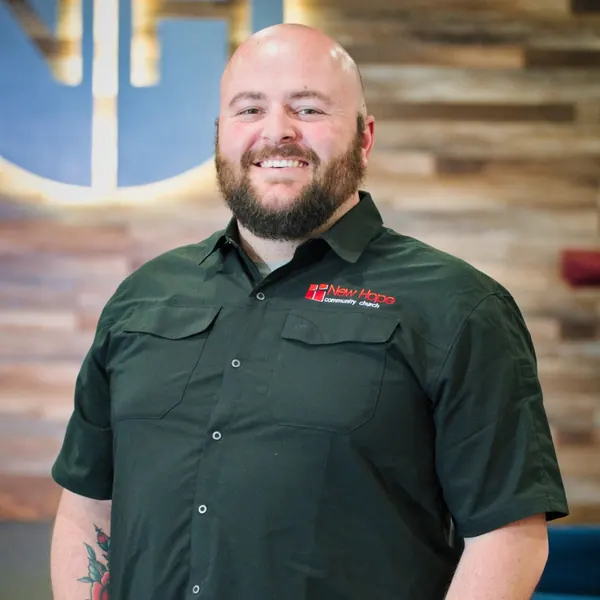
Kyle
Relph
Associate Pastor of New Hope Community Church.
Worship and pastoral care. Biola Cinema and Media Arts. Regularly leads worship and helps create a welcoming atmosphere for Sunday services. He also co-leads The Gathering, our college-age young adult community.
This message is part of A Summer with C.S. Lewis, an eight week series on the man whose books have pointed so many people toward Christ. Every message in the series is gathered there.
You're welcome at New Hope.
All three Sunday services at 8, 9:30, and 11 AM are identical, same teaching and same worship, so come at the hour that works for you.
Get directions (opens Google Maps in a new tab)