


Close to the brokenhearted.
Main scripture: Psalm 34
This is an edited transcript of the message, made from the recording and checked against it on October 8, 2026. To read clearly, it leaves out asides to the room, false starts and repeated words, and changes or adds a few words where a spoken sentence needed it. Otherwise the words are the preacher's own, and scripture is given as it was read aloud.
Transcript
An acrostic psalm with a backstory
Well, we're going to be in Psalm 34. That's the next one in our sermon series on The Psalms We Live. Last week, Pastor Kyle did a great job looking at Psalm 13 and all that that meant for David. And we're going to stay with David this week as well, because he's the one that wrote Psalm 34. The way it's written, though, is slightly different than many of them. There's eight others like it in the book of Psalms. They are what are called acrostic psalms. So there's nine out of the total 150 that are written this way. It means they go through each letter of the Hebrew alphabet, so that each verse begins with the next letter. There's 22 letters in the Hebrew alphabet. And guess how many verses there are in Psalm 34? It's 22, all right.
Kyle's was a psalm of lament, one of the psalms of sorrow. But in contrast to that, we're going to be looking at a psalm of thanksgiving. A couple of weeks back, I talked about the different kinds of psalms, and the fact that the psalms of lament took a large chunk of the 150 psalms in the book. About a third of them are psalms of lament. Then there were others, like thanksgiving, and there were the royal psalms, and there was praise. So we are going to be looking at one for thanksgiving. We're going to take it a section at a time, but we will go through the whole psalm.
The interesting thing about this psalm is that it has a good backstory to it. And we know this because it's written in the introduction of the psalm. The introduction tells us that it's of David, so we know he wrote it, and we know kind of what the circumstances were before it was written. And then it says, when he pretended to be insane before Abimelech, who drove him away, and he left. Pretending to be insane before Abimelech sounds odd and out of context. You're like, I don't know what that means. But if you don't know the story of David, I'll kind of get you caught up a little bit on when this occurred.
Pretending to be insane at the gates of Gath
So David ends up being pursued by King Saul and Saul's army. And he goes from having everything to having nothing. He was the hero of the people. People loved him. His wife was the king's daughter. His best friend was the king's son. He had an army that was very loyal to him. But that all vanished once King Saul turned on him. He had to escape. He had to go from place to place. He had no weapon. He had no food. And he found himself at the gates of his enemy. He found himself at the gates of the city of Gath. Now, if you know anything about David, you know that David was the one that slayed the giant Goliath. And Goliath was from Gath. So this really is right in the thick of it when it comes to this enemy. But in his mind, what's a safer place to hide from King Saul than in his enemy's city? So I guess that was the theory behind that.
But apparently he didn't do a very good job disguising himself, or didn't realize how much people knew what he looked like. Because when he was in Gath, it says in 1 Samuel 21, verse 10, that
“David fled from Saul, went to Achish, king of Gath. But the servants of Achish said to him, isn't this David, the king of the land? Isn't he the one that they sing about in the dances? Saul has slain his thousands, but David his tens of thousands. So David took these words to heart and was very much afraid of Achish, king of Gath. And he pretended to be insane in their presence. And while he was in their hands, he acted like a madman, making marks on the doors of the gate and letting saliva run down his beard. Achish said to his servants, look at the man. He's insane. Why bring him to me? Am I so short of madmen that you have to bring this fellow here to carry on like this in front of me? Must this man come into my house?”
So they recognized who he was. He felt like he was in danger once again. So he pretended to be crazy in front of King Achish, also known as Abimelech. He was scratching at the doors, foaming at the mouth. And the king basically said, I've got enough crazy people in my court. I don't need any more. We don't need him here. I don't want to deal with him. So not surprisingly, they let him leave. In fact, they encouraged him to leave. I'm not sure what David thought was going to happen when he went to Gath. If he was recognized, of course he was going to be in danger. But in the next chapter, we find out where he goes after he leaves Gath. So in 1 Samuel 22, it says,
“David left Gath, escaped to the cave of Adullam, where his brothers and his father's household heard about it, they went down to him there. All those who were in distress or in debt or discontented gathered around him, and he became their commander. About 400 men were with him.”
So now David's in these caves, in Adullam. His brothers hear about what's happened. They go to be with him, which is interesting, because he didn't have a great relationship with his brothers early on, but now they go to be with him. And pretty much anybody else that needed to get away from King Saul at that time. Perhaps they owed the king money. Perhaps there were back taxes that they owed. So they thought, well, I'm just going to get out of here and go be with David. Perhaps they were just disgruntled at the way that the king had been ruling. Or maybe they were some of the original men in David's army, the very close ones that were around him, that he fought side by side with. But they gathered together, 400 of them in total, and he became their commander. It's generally accepted that this is when he wrote this psalm. In the cave, surrounded, finally, by support, but still a fugitive from King Saul. But he was thankful to the Lord for delivering him from the king in Gath. So this is the backdrop for the psalm of thankfulness.
Praise at all times
So the first three verses of the psalm start with, I will extol the Lord at all times. His praise will always be on my lips. I will glory in the Lord. Let the afflicted hear and rejoice. Glorify the Lord with me. Let us exalt his name together. I will extol. In other words, I will praise Him with great enthusiasm, and I will do it at all times.
There are two things here that you should underline, or highlight, or whatever it is you do in your Bible to draw your attention to something that you need to remember. And I've said this before, and I'll say it again, but the best way, in my opinion, in my experience, to read the Bible is to read a verse and see which words jump out at you. Which ones are the key words that really set the tone for that verse. Some verses join into others, so that's different. But in verse 1, the two words you really need to pick out are all times, and always. Praise the Lord at all times, and always. What is the exception to always? There is no exception to always. It should always be on our lips. There's no doubt here that David wants us to realize that we should be constantly praising God. Not just with our hearts, not just in our minds, but on our lips. We should be speaking the praise out to the Lord as well.
Charles Spurgeon, a great pastor from the UK a long, long time ago, wrote a great commentary on the psalms of David called The Treasury of David. And he says about this verse that we are to bless the Lord. It is never unseasonable. In other words, there's not a season to blessing God or praising God. There's never a bad time, whatever season it is. His praise should continually be in my mouth. Not in my heart merely, but in my mouth too. Our thankfulness is not to be a dumb thing. It should be one of the daughters of music. Our tongue is our glory, and it ought to reveal the glory of God. What a blessed mouthful is God's praise. How sweet, how purifying, and how perfuming. So, a blessed mouthful. If we always have a mouthful of praise, then it's very difficult to leave much space for anything else that is just not useful, or not helpful, or not ethical. In other words, if we have a mouthful of salad, you can't eat chocolate cake.
And Paul uses the general idea in Philippians 4. He says, rejoice in the Lord always. I say it again, rejoice. Always. It is a reminder to us that whatever the situation or circumstances that we find ourselves, and both David and Paul had found themselves in some very challenging circumstances, whatever it is, we keep praise on our lips. Not just in our heart, but on our lips as well, to the Lord.
And verse 2 reinforces this. I will glory in the Lord. If you have other versions, like the New King James Version, it says, my soul shall make its boast in the Lord. Now, boast in the Lord. We're always told not to boast, especially as kids. You're told, don't boast about those things. But we can boast in the Lord as much as we want. We can boast about what He has done in our life. We can boast about His power and what He has the capability of doing. And in this case, the boasting was about God saving David from the king of Gath. And he could have taken credit for that himself. He could have said, how clever am I? I saw that I was in danger, so I just acted all crazy, and then they let me go because they didn't want to deal with me. Who's crazy now? But instead, he was boasting in the Lord and boasting about his mercies.
Then he said, let the afflicted hear and rejoice. The afflicted. Who are the afflicted? Again, in other versions, it says the humble. It could refer to the 400 men that are surrounding him and hanging out with him as he hides from Saul in this cave. But once again, he says in verse 3, glorify, or magnify, with me the name of the Lord together. And again, if you're underlining a word in that, then together is the word. As a church, we can magnify and glorify the name of the Father together. It truly makes a difference. If I was to stand up and just sing worship on my own and you're all in here, that wouldn't be a good experience. When we're together, we sound so much better together. We are stronger together as a church. And he's just reinstating this idea of community when it comes to being together and praising God.
The Lord encamps around us
And then in verse 4, the next section of this psalm, it says, I sought the Lord, and he answered me. He delivered me from all my fears. Those who look at him are radiant. Their faces are never covered with shame. This poor man called, and the Lord heard him, and he saved him out of all his troubles. The angel of the Lord encamps around those who fear him, and he delivers them. So David sought the Lord. He was answered, and he was delivered. How did he seek out the Lord? Through prayer and petition. Prayer and petition. Again, back to Paul in the same part of Philippians 4. Do not be anxious about anything, but in every situation, by prayer and petition, with thanksgiving, present your requests to God. And the peace of God, which transcends all understanding, will guard your hearts and minds in Christ Jesus. So through prayer and petition, that's how we go to God, and we ask him, and he will guard our hearts and our minds.
In verse 6, he says, this poor man. He's talking about himself here. This poor man has come to the Lord, and the Lord has saved him and heard him, and he's listened to him, and he's helped him. Because the Lord, he encamps around all that fear him. Sometimes we're very unaware of the fact that the Lord is encamped around us, taking care of us, protecting us, clearly with much more power than anything that can go against us.
But think about the story that we find in 2 Kings 6. It's about Elisha, or more specifically, it's about his servant. In verse 15, it says, when the servant of the man of God got up and went out early the next morning, an army with horses and chariots had surrounded the city. Oh no, my Lord, what shall we do? the servant asked. Don't be afraid, the prophet answered. Those who are with us are more than those who are with them. And Elisha prayed, open his eyes, Lord, so that he may see. Then the Lord opened the servant's eyes, and he looked and saw the hills full of horses and chariots of fire all around Elisha. Encamped around Elisha. The servant couldn't see it. Elisha could. But this is a wonderful picture of the protection that God puts around us. And we may at times be blissfully unaware of that, because we don't need to see it. We just need to know that it's there. We just need to know that the Lord encamps around us, or He encamps around those who fear Him, as it's put in this psalm. A type of awe, and a type of respect, a type of fear. And He will deliver us.
We've heard this expression, put a hedge of protection around us. This comes from Job 1, verse 10. But in this case, it's hills filled with horses and chariots of fire. That's protection, and that's power. Jacob meets God's angels for protection when he's going to meet his brother. And there's different examples of God's army being available to us and covering us in these moments that we need him.
Taste and see
Then we get to verse 8 of this psalm. And in my opinion, it's kind of the iconic verse of this psalm, and actually many others as well. But I just love this verse, because it says, taste and see that the Lord is good. Blessed is the one who takes refuge in him. Taste and see that the Lord is good. This expression just conjures up this amazing personal connection with God. You can't truly experience the Lord unless you experience him fully. It's one thing to see the Lord God and what he does through his actions. It's one thing to feel what he does when it comes to our own lives. But to taste it becomes this fully immersive experience.
Imagine if someone pulls out this beautiful loaf of bread right out of the oven. It's golden brown, it's crispy on the outside, and it's just crackling as it begins to cool. Then they cut into it, and we see this lovely soft inside, moist, steaming, warm. We can smell the amazing aroma of freshly baked bread. And when you put butter on it, the butter melts. And you might put jam on it, whatever it is that you want to put on it. You all hungry yet? But at this point, you just know it's going to be good. And then you finally get to taste it. It's just confirmation of what you already know. It is delicious.
And there's a wonderful connection here with what Jesus talks about in John 6. In verse 35, it says, then Jesus declared, I am the bread of life. Whoever comes to me will never go hungry. Whoever believes in me will never be thirsty. And then in 53, it says, Jesus said to them, very truly I tell you, unless you eat of the flesh of the Son of Man and drink of his blood, you have no life in you. Taste is this final frontier before something is inside us. And it's at that point, when we eat something, that our bodies absorb the nutrition from it, assuming it's something nutritious in the first place. But when we internalize our relationship with God, it becomes more than something just to look at. It becomes more than something just to talk about, or maybe to touch. We take in His Word, and it becomes part of who we are. Spiritual nutrition in our lives.
This is somewhat of a theme in Scripture. In Ezekiel chapter 2, and the very beginning of chapter 3, we see that it says, but you, son of man, listen to what I say to you. Do not rebel like this rebellious people. Open your mouth and eat what I give you. Then I looked and saw a hand stretched out to me. It was a scroll, which he unrolled before me. On both sides of it were written words of lament and mourning and woe. And then he said to me, son of man, eat what is before you. Eat this scroll, and then go and speak to the people of Israel. So I opened my mouth, and he gave me the scroll to eat. Then he said to me, son of man, eat this scroll I am giving you and fill your stomach with it. So I ate it, and it tasted as sweet as honey in my mouth. Eat the scroll. If you've never read Ezekiel, this might seem a little strange. If you've read Ezekiel before, then you kind of understand. This is sort of everyday life for Ezekiel. God had him do some interesting things. If you've never read it, read Ezekiel. It's quite the read.
Eat the scroll that God hands to him, and it tasted as sweet as honey in his mouth. This is God symbolizing that the words he is giving to Ezekiel, in this case as a prophet, should be internalized completely, absorbed into his very being, and become part of him as he declares it to the people. And when he does speak, it will ensure that he has total divine power in what he's saying. And when you give a message that people don't like, which the prophets often did, then they need all the divine power that they can get. Ezekiel's message was of the destruction of Jerusalem, a bitter message. But he emphasizes that even though the message is bitter, the truth of God's word is always sweet on our lips. We also see it in Revelation. John eats a scroll from the angel. Sweet to the taste, but bitter in his stomach. The message was of suffering at end times, but the truth of God's word tasted sweet on his lips. So taste and see that the Lord is good.
There's a story about a divinity school that hosted an annual picnic. Every year they'd invite some of the greatest minds to lecture in this theological education center. Well, one year they had a lecturer who was a professor, and he spoke for two and a half hours, proving that the resurrection of Jesus was false. The professor quoted scholar after scholar, book after book. He concluded that since there was no such thing as a historical resurrection, then the religious tradition of the church was groundless. It was over-emotional. It was just mumbo-jumbo, because it was based on a relationship with a risen Jesus who, in fact, had never risen from the dead in any literal sense.
He then asked if there were any questions. About 30 uncomfortable seconds went by, before finally an old preacher with a head of woolly white hair stood up at the back of the auditorium. Dr. Professor, I have one question, he said. All the eyes turned to him, and he just casually reached into his lunch sack, and he pulled out a small apple. He started to eat the apple. He took a bite, crunch, crunch, munch, munch, as he was just eating the apple. Everyone was waiting for the question. And he said, my question is a simple question. Then he took another bite of the apple, and he was crunching through that. He swallowed that, and he said, now, I've never read any of those books that you've read. He took another bite of the apple, was crunching his way through that. Everyone was waiting. And I can't recite the scriptures in ancient Greek. Took another bite of the apple. Was eating through his apple. And I don't know much about Niebuhr or Heidegger. Took another bite of the apple. Was crunching his way through the apple. Finally, he finished it. He said, all I want to know is this. The apple that I just ate, was it sour, or was it sweet?
And the professor paused for a moment. He answered in exemplary scholarly fashion. He said, I cannot possibly answer that question, for I have not tasted your apple. The white-haired preacher dropped the core of the apple into the crumpled paper bag. He looked up at the professor, and he said calmly, neither have you tasted my Jesus. The thousand-plus in attendance could not contain themselves. The auditorium erupted with applause and cheers. The professor thanked his audience, and then promptly left the stage.
When we think about tasting, it's either because we're savoring what we already know to be rich and delicious, this taste of something that we crave, or we taste it just to try it. Just a small bite, just to taste. When it comes to Jesus in our life, if we know him, and we love him, and we understand his presence in our life, we cannot wait to taste more. If you haven't tried, try a little bite. If you've never tried it, how could you possibly know the delights of what he will do in your life? David, in this psalm, is encouraging everybody to taste. Just try it. Try it, because the Lord is good. Those that take refuge in him, he says, they'll be blessed.
It doesn't mean that life will be without issue. It doesn't mean that you just go along swimmingly. What it does mean is that he is the cove in those storms of life. The storms in the ocean are going to happen no matter what. It's about finding a place in the storm where you can weather it, where the effect can be minimized. On YouTube, I watch this family. They sail around the world in this boat, and they go from country to country, continent to continent. It's fun to watch. Very interesting places they go to. But they generally manage to avoid large storms when they come along in the oceans. But every now and then, the storms are so widespread, or they're so wide, that they cannot get around them, or they cannot avoid them like they normally would be able to. So what they do then is they go find a sheltered cove to anchor their boat in, so they can weather the storm and get through it with a minimal amount of effect. The storms are coming, but it's about being prepared to weather them.
And in our lives, things are going to happen. Sometimes it'll be our own fault. Sometimes it'll be something that someone else did, and we're just affected through their own sin. But our sheltered cove, our refuge, is to have the presence of Jesus in our lives. The book of Psalms alone has 40 references to this idea that God is our refuge. In the Old Testament, there's 90 references to say that God is our refuge. So there's a real theme going on in his word when it comes to this, and for good reason. Because it makes an immense difference. When we stand up in the most difficult times in our lives with God in our heart, internalized inside us as we absorb God completely into our life, we don't just hold God's word in our hands, but in our hearts. We can weather the most fierce storm, because he's stronger than anything that could come up against us.
Close to the brokenhearted
David continues in verse 9. He says, fear the Lord, you his holy people, for those who fear him lack nothing. The lions may grow weak and hungry, but those who seek the Lord lack no good thing. Come, my children, listen to me. I will teach you the fear of the Lord. And he uses this expression, fear of the Lord, again. But it's not the kind of fear where we just crouch and tremble when we hear his voice or his name. No, this is the kind of fear where we stand in awe. We stand in reverence, and a healthy respect for who he is and the power that he holds.
And then it says, the lions. In some versions it will say the young lions, the lions that grow weak and hungry. In other words, even the most powerful of the beasts, the lion, and especially the young lions, who are always the ones that get fed first, they will find themselves without food. They'll be weak, and they'll be hungry. But those who look to God won't find themselves like that. Even the strongest in society, without God, will find themselves destitute, no matter what they need. It doesn't matter, their strength. Those who trust in God will taste the goodness of God, and they won't be without. And David, in all his experience, can show what it is like to fear the Lord, to be in reverence. After all, he is a man after God's own heart.
In verse 12, he continues. It says, whoever of you loves life and desires to see many good days, keep your tongue from evil and your lips from telling lies. Turn from evil and do good. Seek peace and pursue it. The eyes of the Lord are on the righteous, and his ears are attentive to their cry. But the face of the Lord is against those who do evil, to blot out their name from the earth. The righteous cry out, and the Lord hears them. He delivers them from all their troubles. The Lord is close to the brokenhearted and saves those who are crushed in spirit. He says, if you love life, if you want to see good days in your life, then David gives some advice here. Start off by, just keep your tongue from evil. Keep your lips from telling lies. In other words, be careful what we say. It makes a big difference. Careful what we say to people, or careful what we say about people. Trust me, it gets back to people, what you say, even if they don't find out about it straight away. Hurtful words can go a long way. It may take 20 seconds to say something bad about someone, but the effects can last a decade. Physical injuries heal much quicker than emotional scars.
But in verse 14, he says, turn from evil and evil practices, and do good. What is good? Well, Scripture is filled with it. The Word of God provides us with exactly what is good and just and right, and what is the fruit that we should see from our lives from that good. Then verses 17 and 18 reiterate what he has said. They reinforce this idea that even in the most dire of circumstances, if we cry out to God, if we expose our broken hearts to Him, He will be close. He will be with us. But we have to invite Him into our broken hearts.
And the theme of brokenness continues in the next verses, where it says, the righteous person may have trouble, many troubles, but the Lord delivers him from them all. He protects all his bones. Not one of them will be broken. Evil will slay the wicked. The foes of the righteous will be condemned. The Lord will rescue his servants. No one who takes refuge in him will be condemned. He protects all his bones. Remember Daniel. There's not a scratch from the lion in the lion's den. Why? Because he committed himself to honoring and glorifying God, and praying to God, even when he was surrounded by pagans and idols when he was in exile. He wasn't going to be lured into that idol worship, and he was spared from the lion's mouth. Jesus suffered all the brokenness of his own body so that we could be spared from it ourselves. Because we might have troubles, but he will protect us, and he will rescue us, his servants.
And again, we see this expression, take refuge. No one who takes refuge will be condemned. And Paul echoed this over a thousand years after this in his letter to the Romans, where he said, therefore, there is now no condemnation for those who are in Christ Jesus, because through Christ Jesus, the law of the Spirit who gives life has set you free from the law of sin and death. What does that mean for us? What does condemnation mean? Well, it starts off because we can never be righteous in God's eyes on our own. On our own, we cannot be righteous. In other words, we can never stand alone and say that we are perfectly aligned with God's will. We can never stand alone and say that we are following His commandments without fail, and that we are gushing with the fruit of the Spirit, and that our lives are a model of perfection in the broken world. Because we have sin in us. We have been burdened with this sin nature, which came about when the very first people in the Garden of Eden made this conscious decision to go against God, to defy God's orders. And from that point on, every person inherited this sin nature, from the kids of Adam and Eve onwards. So we can never stand alone and say that we are righteous. Some may like to think that they are. But we stand in this together, when it says all have sinned and fallen short of the glory of God. No exceptions.
But this is what David is trying to get across here, and this is what makes it such a powerful psalm of thanksgiving. The Lord will deliver us. He will not condemn us if we take refuge in him. And that starts with tasting and seeing the goodness of God. It comes from tasting the life in Christ and seeing the positive effects that it has. And then it takes internalizing that relationship. It's good to read the word of God. It's great to serve in his kingdom. It's great for people to see the change that our faith has made in our lives. But it's so much more personal than that. Once we absorb Jesus into our very being, the fiber of our day-to-day life, woven into the fabric of our lives, then we begin to see a life that is truly aligned with God.
A life of freedom from fear
What does that life, a life that's aligned with Jesus, look like? It's a life where we find reason every day to praise him. To praise him constantly on our lips. To come together and exalt his name and worship him with complete abandon. It's a life where we face the fears that we have in our lives. We face the doubts that we have. We face the insecurities that we have, that the evil one so skillfully plants inside us, and it gives us confidence because of who Jesus is.
It's a life where we can look radiant. Verse 5 of this psalm, those who look on him are radiant. The Hebrew word there is nahar, which is like a description of the rays of light, of delightfulness and cheerfulness. It's a life that gives us the assurance of a port in the storm, and protection from anything in life. Even protection from death. Because even if death comes, it's merely stepping from this world into eternal salvation and restoration with Jesus. It's a life that gives us freedom. Freedom from what? Well, for a start, we don't have to be a slave to fear anymore. And he talks about fear in this psalm as well.
We can experience fear in different ways. Sometimes we're afraid that when we try and put on a good face, people will see through it. Perhaps we're afraid of losing the things that supposedly make us successful in life, like the large house, the latest technology, the brand-new cars or designer clothing. The sort of trappings of this world. Or perhaps we're afraid of not being part of the groups that seem to have the most influence, that seem to have the most social power, or the most information about others. Or perhaps we're afraid of the image that we've carefully constructed. We're afraid of it breaking down and exposing us for who we truly are. Or it could simply be that we're afraid for our lives, the physical danger in this world. But there is freedom from that.
I recently heard a story about a family that seemed on the surface to have it all together. They lived in London. They lived at a very sought-after address. Their kids were in a very progressive private school, where the kids could call their teachers by their first name, but they weren't really learning very much. They had a business. They had all the designer clothing, the house, everything that they'd strived for in the early days, when they were so poor at the beginning, when they cobbled together this wedding reception when they first got married. But things got so much better after that.
The problem is, the husband was never home. The stress of making all this work was breaking him down. And he finally voiced this to his wife on Valentine's Day, of all days. But she saw what it was doing to him, finally. They made a pretty quick decision that they needed to move. They needed to change. So they moved out of the city. They made a new home in a farmhouse, and they lost what had previously been seen as the great benefits of being in the city. But something happened to them. They thrived. The kids thrived. They felt like the burden had been lifted from them. There was a new freedom they'd never experienced before. The stress began to melt away. The fear began to melt away. And the pretense began to melt away. Even their cat, who had been an indoor cat up to that point, he'd been a very skittish and twitchy and aggressive creature, even their cat found a whole new lease on life. He was living his best life, and he was a very pleasant cat to be around.
I'm not telling you you won't be happy unless you live in a farmhouse. What I'm saying is that you can find freedom in this life without having to move houses, or change jobs or schools, or uproot your whole physical life. We can find freedom from the fear that burdens us. We may not be aware of what fear we have on a day-to-day basis, of what burdens we drag around with us, but it's what holds us back from moving forward. And it keeps that sort of small tension always in the back of our minds. Or perhaps it's just all-out stress every day. But that's not what God wants for our lives.
He wants us to know, through David and through this psalm, that we can have refuge in Him. We can be assured that He encamps around us, even if we physically can't see him. And we know that when we taste the Lord God, the sweetness on our lips will show us that he is good. David experienced a freedom when stress would have been the natural reaction. And he thanked the Lord through this great passion that we see in this psalm. If we align ourselves with God's purpose, if we prioritize what God wants us to prioritize, in other words, what's important to God should be important to us too, then we will be found righteous in his eyes. And he will be very attentive to our cries.
Let's pray. Heavenly Father, we're thankful for David's example. We're thankful for the fact that we can come to you. We can have our broken hearts wide open, and you will be present. You'll be with us. And in those moments that we fear the most, you will encamp around us. Even if we can't see you, we can rest assured that you are there. If we honor you with our lives, if we align ourselves with you, if we connect with you in a way that allows us to see the way forward, you justify us through our faith. Lord, you provide so much for us. Often we don't see it. Often we don't think about it. But Lord, we're so grateful that through your word we get to experience this. So open our eyes, Lord, to understand that you are a refuge. Anything that we are fearful of now, we can take shelter with you. So Lord, we're thankful. We just pray today we will taste and experience what it is to be in you. So we give ourselves to you, and we pray this in Jesus' name. Amen.
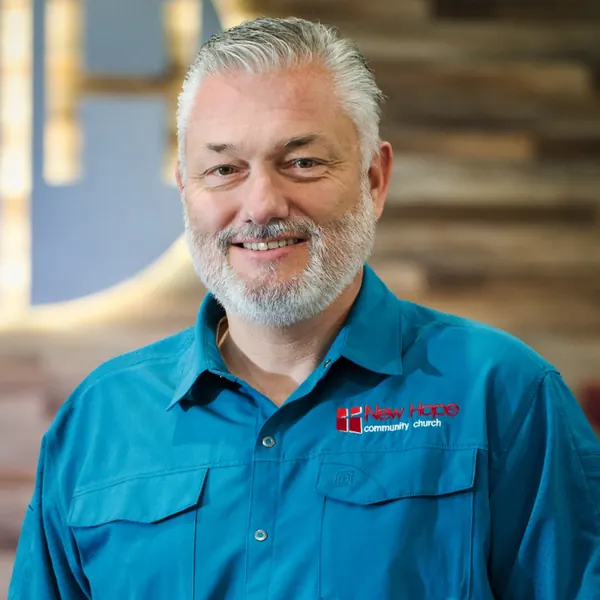
Mark
Addis
Senior Pastor of New Hope Community Church.
Senior Pastor at New Hope since December 2022. Joined as an elder board member and Associate Pastor in 2016. Master's from Moody Bible Institute, and a Commercial Pilot license.
This message is part of The Psalms We Live, and it's one of the messages gathered on our grief support page, where you'll also find GriefShare's meeting schedule and a monthly lunch for anyone who has lost someone close.
You're welcome at New Hope.
All three Sunday services at 8, 9:30, and 11 AM are identical, same teaching and same worship, so come at the hour that works for you.
Get directions (opens Google Maps in a new tab)