


How long, Lord?
Main scripture: Psalm 13
This is an edited transcript of the message, made from the recording and checked against it on October 8, 2026. To read clearly, it leaves out asides to the room, false starts and repeated words, and changes or adds a few words where a spoken sentence needed it. Otherwise the words are the preacher's own, and scripture is given as it was read aloud. Words in square brackets are an editor’s note.
Transcript
When life just happens
I think it would be pretty safe for me to say that sometimes life just happens, right? Whether we like it or not, things will happen in our life that we don't understand, that we don't like, or that maybe put us into an incredible amount of stress and anxiety. And the best part about that is that usually it happens when we least expect it, right? Whenever things might be going pretty good, that's when something comes in and takes over. Maybe not all of us in this room have experienced the same thing, but we all understand that it happens to all of human life. And maybe this is something you've experienced in your own life, because I know I have.
Now, before I was called here to New Hope, I was working at a church in Hanford. I was there for about four years. Three years in, I married my wife, Gianna. We were there another year when we started feeling this call to go somewhere else, like our time in Hanford was coming to a close. And so we settled on moving back home to Clovis. We found out we were pregnant with our son, Nash, and we wanted to come to a place where we had the immediate support and stability of family, who all lived in the same area. I know Hanford's only 45 minutes south of here, but to be able to drive 20 minutes down the street in an afternoon, versus making a whole day commitment to a different town, we felt that desire to be closer to our family.
So we were moving here, and in this process of leaving, I thought I was going to be done working as a full-time pastor. I thought I was leaving vocational ministry, and so I started trying to line up work outside of being paid by a church. And so I had all my ducks in a row to start my own media business. That changed into applying for other jobs at different companies around town. And the last thing I lined up was to own and operate my own food trailer through a friend's restaurant business. And so I was pretty excited. Gianna had a lot of trust in me and what I was going to do. And I was ready to go.
I was in talks with this company out in Texas who was going to build the food trailer for us, custom made, all the restaurant equipment inside of it. I was in conversation with a bank that works specifically with restaurant businesses, I think they're based out of Southern California, to provide me a loan to pay for that trailer. And I was one signature away from agreeing to that loan when I got a phone call from the buddy I was going to do this business with, who said, hey, we can't use the truck anymore. I got to sell it. Because I had a Nissan Frontier, which, yeah, that's a good truck, but it doesn't have the tow ability to carry an 18 to 21-foot trailer filled with restaurant equipment. And we were expecting to use my buddy's truck to go pick up the trailer and bring it back, and then drive that trailer around to the different events we would be cooking for.
And so when he called me and said, hey, we can't use it, my heart sank. Because this is what we were expecting. And not only was I already getting myself into a place to take on an immense amount of debt, debt we were under the impression we could pay off pretty quickly based off the success of the business and the other restaurants and the other food truck it had, but I couldn't in good conscience take on the cost of a new truck, even a new used truck, let alone the car payments, the registration, the fuel, the insurance. I could not add more to the debt that was already there. And so I had to back out. I had to say, I physically cannot do this with you anymore.
And this was at a time, too, when I was a couple paychecks away from my last paycheck from the church in Hanford. We had just bought a house in Clovis, the house we're still in, with the expectation that I was going to pay for it with the money I was going to make from the food truck business. And I was a few months away from the birth of my son, with no job, no income, and nothing to do in order to provide for my family. And it was at this point where, I believe, it was the lowest point of my life. I was filled with anxiety. And I think I had what I would consider to be my first real panic attack. I was in my house crying, questioning where God was. I literally cried out and said, God, where are you?
Today, the psalm we're going to be reading is Psalm 13. It's this iconic psalm of lament written by David. But I don't want to read it just yet. Put a bookmark in Psalm 13, then close your Bible. Because what I want to do is set up the emotional backdrop of what we're going to be talking about today.
Setting the scene: David, and Job
Now, when David was writing this psalm, I believe it was before he actually became king. And the going theory is that this is when David was being chased down by King Saul to kill him. If that's truly the timing, this would have been David probably experiencing the lowest point of his life. Because he was out in the wilderness. He had no one. He had nothing. No one was there to help him, to protect him, to take care of him. And yes, David was a man after God's own heart, but he was also somebody experiencing an incredible amount of heartache and hardship. And I believe he is writing this psalm out of that deep emotional turmoil.
And so to further set the emotional scene, I'm going to tell you another story. As I'm sharing it, I would encourage all of you to put yourself into the place of the person we're going to be talking about. Put yourself into the same scenario, and really consider the emotions that person must have been feeling, and how you would feel them.
And so picture yourself now as a person who's grown up in a good family. Like a really good family. Like that family, the one you all know and idolize. You're like, ah, they just got it all together. They got it all figured out. You grew up in that family. You're able to have an incredible education. You're able to grow up with a loving mom and dad. And you grew into a place where you were able to take over and learn the family business. You ate good. You slept good. You had incredible friendships. You would even say that you yourself are a stand-up kind of person. Not perfect by any means, but you're a good guy or a good gal. You're solid. Genuinely, you are the epitome of the kind of person that nobody can be mad at, because of how great you are and how great your life seems to be.
Now, you get married, and you probably have a few too many kids, but you're happy. You've got sons and daughters. You're just this happy, handsome family doing pretty good. You pray for your family on a regular basis. You provide for your family, and your business does so incredibly well that you are known as a very wealthy family. But not like that rich family that lords their wealth over other people and uses it to abuse or manipulate situations. You are a kind, good family that uses your wealth very generously. You give regularly. You take care of others on a regular basis. Truly, everything is going well.
And one day, as you are waking up, you make your morning cup of coffee. You go stand out on the back porch. The sun's just starting to crest over the mountains in the background. The day's about to get started, when you get a phone call. You're excited. It's a happy day. Good start. Nothing to worry about. Then, as this phone call progresses, your heart drops, and your countenance changes, and your heart drops further and further. You were just informed that any means of transportation you might have had, whether for business or for home, was just stolen. The storage garage on your property was broken into last night, and every single vehicle you could have used for work or for home, just gone.
That might not seem like that big of a deal, but then it's followed up by the news that every single bit of merchandise, every single thing you used to make money for your business and for your family, was burnt up in a fire. Someone broke into the property, went to the warehouse, and just set it all ablaze. So not only are all of your vehicles gone, but everything you could have used to make money, to try to recuperate anything, that's all gone too.
But it doesn't stop there. Apparently, all of your kids were having a grand old time. They were hanging out in one of the houses on the far end of the property, drinking wine, eating food, when an earthquake hit. Destroyed the home. All four walls falling in on themselves. Roof collapsing. All of your kids, gone. Everything you could have done to get anywhere. Anything you could have done to make any money. And now your entire lineage, all of your kids, everything that you had and held dear, gone. Everything except for your spouse, who's there.
But then again, it doesn't stop there. Your heart's just kind of destroyed at this point, when all of a sudden you start feeling some itching. You start scratching your arm. You start scratching your head. Your knees are starting to hurt a little bit. You roll up your sleeves and notice these sores all over your body, from head to toe. And the only way you can even mitigate some of that pain is by sitting there and scratching them with any and everything. With your teeth, with a knife, with whatever you can, to try to stop that pain and stop that itching. And it's at this point your spouse looks at you and says, it's probably better that you just die. Curse God and die.
What would you do? How would you feel in this moment? Because this is what Job went through. The life that he was given before the end of his story. And I believe this is a similar emotional point that David must have been in when he wrote this psalm. Regardless of what was going on, we can see and know the pain that he was going through. And if he truly wrote this while he was running from Saul, then this really would have been that lowest point of his life. Having no one, and having nothing. How would you respond?
Psalm 13, read
So let's open up Psalm 13 and see how David did. A man after God's own heart.
“How long, Lord? Will you forget me forever? How long will you hide your face from me? How long must I wrestle with my thoughts and day after day have sorrow in my heart? How long will my enemy triumph over me? Look at me and answer, Lord my God. Give light to my eyes, or I will sleep in death, and my enemy will say, I have overcome him, and my foes will rejoice when I fall. But I trust in your unfailing love. My heart rejoices in your salvation. I will sing the Lord's praise, for he has been good to me.”
David starts this psalm by questioning God. He starts with that sentiment of, how long? How long is this going to take? He even questions if God has forgotten him entirely. When you look at the Hebrew language in the Hebrew Bible, that word for forgetting isn't so much a cognitive act of, oh no, it must have slipped my mind. No, in the Hebrew, when you remember someone, it gives this impression that it is a positive action of movement toward someone else. You are positively moving in the direction of someone you can help, someone you can care for. And so the act of forgetting is the exact opposite. It is actively moving away from someone you care about. Actively moving away from his situation. Actively moving away from being able to help or care. And so when David says this, he's not just saying, oh God, hope you haven't forgotten me, hope I haven't slipped your mind. No, David is saying, God, where did you go? Why have you turned your back to me? Why aren't you helping me?
He goes on to say, how long must I wrestle with my thoughts and day after day have sorrow in my heart? Reading this gives the idea that David is struggling. His mind is racing. He doesn't know what to think or even feel, and has this deep anguish in his heart because something is wrong. Something is really off. And so what does David do? He starts making demands of God. Not only is he questioning God and his intentions, now he's telling God to answer him. He's telling God to help him stop being depressed, or he might be overcome by his enemies, and then they would have the victory they desire. It's very obvious that there is a prolonged sense of suffering he is going through at this point. And that's why he uses that phrase, how long? And he asks it again and again. We see this suffering. We see that he is exhausted, and he's ready to move on.
But what else is important to notice is this phrase where he says, light up my eyes. And that's actually a Hebrew idiom that means give me strength, give me vitality. So in this circumstance, it's not just complaining. He's pleading with God to give him strength, because he's so obviously overwhelmed. And if God doesn't give him the strength he needs, that will cause his enemies to come in triumph. That's when he'll die. The only way he'll find rest is in his death, when his enemies finally overtake him. So this is really a cry for help to God from David.
And so, yes, David questions God and his intentions. He then makes demands of God out of his own confusion and hurt. But how does this psalm end? He wraps up this psalm by committing his trust to God through his submission. He wraps up this whole poem by humbling himself and restating the trust he actually has in God, and his worship of God, even in the midst of his own suffering. He knows God's love. He's seen it so many times before. And so he trusts in the love of God, even in the midst of that suffering. He's choosing to find room to rejoice in the salvation that comes from God himself. Even in the middle of his own suffering and heartache, he is choosing to sing praise to God. And he has to remind himself of that. He has to remind himself that God is good. And that's actually a great reminder for all of us, even here today.
It's okay to question God
It's okay for us to question God. It's okay for us to be mad at God. I believe that God is bigger than our complaints. I believe that the creator of the universe who made us is bigger than our own thoughts and questions. I believe that the God who made us as human beings can take it.
But even though we might know that, we as humans still try to work out this works-based salvation. Now, what do I mean? We claim to have faith. We claim to believe in who God is. And yet, at the same time, we are trying on our own efforts to prove to ourselves, or to prove to God, that we are good enough. We might think that if we question God, or if we have doubts, that maybe that means we don't believe, or we're not saved, or maybe we're not good enough. And so what we do is we try to pile things on. We try to give more of our time. We try to give more of our money, our talents, thinking that if we just give ourselves more, then we will prove ourselves to God. We'll prove ourselves to ourselves. And that's not acting out of faith. It's good to serve, it's good to give, it's good to do these things, out of a response of our faith in who God is, instead of a response to our own fear and unbelief.
And so I believe it is okay for us to question. Even Moses himself questioned God to his face, or to the burning bush. He looked at the fire in the bush and questioned if God was making the right choice. There are plenty of other psalmists who wrote down questions to God directly out of their circumstance. Even the prophet Habakkuk questioned God throughout his book. He questioned God about his timing and his own agency. Habakkuk 1:2-4. How long, Lord, must I call for help, sounds familiar, but you do not listen? Or cry out to you, Violence! but you do not save? Why do you make me look at injustice? Why do you tolerate wrongdoing? Destruction and violence are before me. There is strife, and conflict abounds. Therefore the law is paralyzed, and justice never prevails. The wicked hem in the righteous, so that justice is perverted.
How often do we ask questions like that? We open up our phones, and the first thing we see on Facebook is an article about something happening halfway across the world, or halfway across our country, or even in our very own state. Atrocities that hurt the heart of God because of the evil of man. And we see these things, and we ask God, why? Why would you let this happen? We see the wickedness of people that inhabit this earth, and we question when God will actually come and restore us back to him. That's normal. It happens regularly. Not even just to us, but all throughout scripture, we can read about it.
At the same time, we have to be careful. Because if we start questioning God as a means of cross-examination, then we're actually starting to question God out of a bitter, untrusting, and even a rebellious heart. When we approach God like that, out of bitterness, out of lack of trust, it's showing more that it is a question out of unbelief, which is ultimately a failure to trust in the Lord and a sign of disobedience to him.
Let me give you an example. In the years of Jesus' ministry while he was on the earth, we read about so many times different Pharisees, the Sadducees, other Jewish leaders that would approach Jesus with questions. But the questions they were asking weren't out of genuine curiosity. They were asking them as a means to try to trick Jesus into saying something against what the Torah taught, to trick him into saying something against what he was already saying for himself, and who he said he was. And that is not sincere. That is asking out of unbelief.
And so when we question God, we should do so with that sincere heart, with a posture of belief in who God says he is. In the same way that David questions in Psalm 13, he still reveres God as Lord. When he's making his demand to God, he still reaches out to him and calls him Lord my God. And so it makes sense why he would finish Psalm 13 by honoring God and proclaiming his trust in who God says he is.
It's okay to ask God for help
And so not only is it okay for us to question God, but I think it's also okay for us to ask things of God, to ask him for the help that we need. That's what those middle couple verses are. Yes, David is making some pretty aggressive demands, but he is genuinely seeking the Lord's help. Jesus himself in Matthew 7 says, ask and it will be given to you. Seek and you will find. James 1:5, if any of you lacks wisdom, you should ask God, who gives generously to all without finding fault, and it will be given to you. Philippians 4:6, do not be anxious about anything, but in every situation, by prayer and petition, with thanksgiving, present your requests to God. There's plenty of scriptural evidence that it is okay for us to ask God for things. He wants us to. But in the same way that we question God, we need to make sure our demands and our requests come out of this posture of belief in who he is.
We quoted James 1:5, but the next couple of verses speak into that. James 1:6-7 says, but when you ask, you must believe and not doubt, because the one who doubts is like a wave of the sea, blown and tossed by the wind. That person should not expect to receive anything from the Lord. And I know, I've already been talking about how it's okay to question God, how we all have our doubts. But when we're talking about doubts here, it gives this meaning that it's more like to hesitate, or to be unsure. And so Scripture gives us permission, and really encouragement, to ask God with the confidence that he will follow through. We can know that God will answer us. We might not know what the answer will be, but we can know that he will. 1 John 5:14, this is the confidence we have in approaching God, that if we ask anything according to his will, he hears us. Mark 11:24, therefore I tell you, whatever you ask for in prayer, believe that you have received it, and it will be yours.
I believe God wants us to ask him for things. He wants to bless us. He wants to take care of us, because we are his creation. We are the only bit of creation that we read about in Genesis that is created in his image. And so it would make sense that the Father in heaven, the creator of all things, would want to bless us, would want to take care of us, would want to help us. Even in the midst of our own turmoil, our goal is to turn to God rather than other things. Because when we're mad, or we're angry, or we're unsure of what's going to happen, our first line of defense is to go to God himself. When we turn to other things, like alcohol or pornography or other people, instead of God himself, we are actually taking away from the trust that we should ultimately put into God.
But that doesn't mean, okay, if I just ask him once, then we're going to be good. No, we must follow that trust and follow those requests with perseverance. We need to persevere and continue to ask, and continue to seek the Lord, even when it's difficult, even when we don't want to, even when we're exhausted. We need to remember to have hope. Robert Schuller once said, when you come to the end of your rope, tie a knot and hang on. He says hope, hanging on, praying expectantly. So we need to hang on. We need to persevere. We need to pray. We need to expect that God will answer.
So ask your questions. God gave you emotions, so it's okay for us to feel them. It's okay for us to feel our emotions when we are asking God for things. It's okay to feel those emotions when we are questioning God. But at the same time, we need to seek him. We need to trust him. We need to look at him in our times of stress and trouble, and persevere those questions, persevere those requests, into trusting that God will in fact help, that God will answer in some way. Hebrews 11:6 says, and without faith it is impossible to please God, because anyone who comes to him must believe that he exists and that he rewards those who earnestly seek him. That is the example set by David. That is what he shows in the writing of Psalm 13. He spends his time, yes, questioning God and asking God a lot of different things, but he does make sure, in this passage, to express his belief, and ultimately his trust, in who God is.
Let's bring back the story of Habakkuk. It's a pretty short book, only three chapters, so if you wanted to read it after church today, here's how it's laid out. Habakkuk asks God a question. He's questioning God, and he does so with some pretty raw, authentic, aggressive questions. But then God answers. And then Habakkuk asks more questions, more authentic, more demanding questions of God. And God answers. And then he ends the whole book with a praise. He ends his time praising God for who he is, thanking God for who he is. What an example, right? Ask God the questions that you have. Wait for a response. And thank him. Thank him for who he is.
And I painted that picture of Job's story, but it didn't finish. If you're unfamiliar, after everything we talked about, his friends come to visit him and try to help him out. Try to give him some advice. Try to console him. It's not very good advice, but, you know, they're there. And then God steps in, and he does so to humble Job. To put Job back into perspective of what's going on. To remind him of who God is and what's happening, so he can understand there's other things at play. And this is Job's response. Job 42:1-6.
“Then Job replied to the Lord, I know that you can do all things. No purpose of yours can be thwarted. You asked, who is this that obscures my plans without knowledge? Surely I spoke of things I did not understand, things too wonderful for me to know. You said, listen now, and I will speak. I will question you, and you shall answer me. My ears had heard of you, but now my eyes have seen you. Therefore I despise myself and repent in dust and ashes.”
Job ends his story with submission, with humility, and he reaffirms who God is. He realizes his mistakes, and at the same time understands that God will in fact answer him in his questions. And so what happens is, God restores to Job everything that was lost. And he says that he was restored even more than what he had originally lost in the first place.
And I think this is a place where the whole deconstruction movement, that was super prominent in my generation and still kind of is, got it wrong. Because there's a large number of people, not everyone, but a good chunk of people, who began to question God and what they believed about God, and then dismantled everything they had once learned. Now, the point of deconstructing something is to then hopefully rebuild something stronger. But instead of rebuilding on God, people began to deconstruct and then rebuild into the world. They sought advice and they sought counsel from the world, and not from the one who created the world. And that's so sad to me, because there's so many people who have not been able to fully experience, or at least understand, that God is the one who understands us the most. Who understands us more than anyone else in this world. Even within our own feeling of abandonment.
God understands, and God answers
We as humans, we as believers even in Jesus, can experience that feeling of abandonment. I've experienced that. I started sharing my story a little bit, and it was in that moment of panic and worry, the moment I still consider the lowest point of my life, when I was quite literally questioning if God was even there. I had to ask the Holy Spirit for help in my unbelief, because I didn't have it. I was struggling to believe that the God who I thought opened these doors for a successful business outside of working for the church was also allowing those doors to shut at the same time. So I had to ask the Holy Spirit for strength, a strength that I didn't have. And I asked God for any opportunity that would allow me to provide for my family.
And that's when my wife, Gianna, reached out to Pastor Teddy, and she asked him if he knew of any kind of church jobs that either New Hope or any other church in town might have. She'd grown up in the youth group at this church, and she knew that Teddy was a pretty well-connected guy. And Pastor Teddy then responded, saying that he'd actually gotten out of an elder board meeting where they had talked about creating an associate pastor role, if I would be interested in applying for it. I'm still here. And so it's been three amazing years that God has continued to show his providence, and continued to remind me of his plan and his sovereignty over even my life.
So not only can God take the frustrations and take the questions that we have, but he also answers them in our feelings of separation. He deeply understands them at the same time. Mark 15. Jesus is on the cross saying, my God, my God, why have you forsaken me? He is at that point taking on the weight of sin for all of human existence onto his shoulders, and his father in heaven cannot be in the presence of sin. So it makes sense that Jesus in that moment is feeling separated from his father. Something completely unique and different to him, that he had never felt in his entire life. And so we can take comfort knowing that Jesus understands our pain. He understands that hurt.
We can take comfort in the hope that comes from that eventual death, and then resurrection, that Jesus had on the cross. Within that death and resurrection of Jesus, there came a promise that we would then be with him for all of eternity, and that we would have salvation. His death and resurrection was the final sacrifice for all of mankind, for all of human existence, closing the gap that was between God and man. And because Jesus was then resurrected from the dead, conquering death itself, that means that our sins are forgiven. And that gift of salvation is a free gift given to us. And as we receive that salvation, we're receiving that gift through our faith in Jesus and in who God is, rejecting the way of living like the world, and repenting of our sins.
We need to remember this. This is the story of the gospel, the good news that Jesus came to bring to the earth. We need to remember, even as believers, as those who've been following Jesus for a hundred years, we need to remember the gospel. We need to remember to have hope.
Don't forget to remember
This is even a message that Gianna and I are trying to teach our son, Nash. For Christmas, we put on his Christmas list this amazing little book called Don't Forget to Remember. It's written by this gal named Ellie Holcomb, who's a Christian music artist. She writes amazing music. She's pretty awesome. But this book is so good. And I was reading it to Nash the other night, and I was hating how, as I'm reading my son's children's book, it was speaking directly into what I was preparing for today. And it was really annoying. It's a cute book. Ten out of ten, would recommend. [Pastor Kyle reads from the book, which ends, and as sure as the sun will keep rising above, don't forget to remember that you're dearly loved.] Kids' books, man. They're the worst.
Don't forget. Don't forget Jesus. Don't forget what he had done on the cross. Don't forget the promise that he has, that he is with you always. Don't forget his goodness, even on the worst day of your life. Every story is different. Every painful, lonely, confusing experience might not look the same. But there is one thing that I do know, and that is, no matter what you are thinking, no matter what you are asking, no matter what you are feeling, is that God is real, and we can trust him, and he loves you.
And so as I'm finishing up today, I'm going to pray. And as I do, if this message of hope, this message of the gospel and God's promise for salvation, is new to you, then I'd ask that you'd pray along with me. Don't let today go by without giving your life to Christ, especially in the face of the good news of who Jesus is and what his death on the cross meant for us. So let today be the day you make the decision to turn away from the rest of the world and give your life into the hands of the Father in heaven, who loves you more than anyone else on this earth can.
So let's pray. Heavenly Father, we thank you for your son Jesus. We even thank you for kids' books that tear away your heart. God, we thank you for anybody who's in here who might not know you, or might not have a good relationship with you, that they would pray with me and say, God, I admit that I am a sinner in need of a Savior. God, I admit that I have lived my life for myself, and I acknowledge that I need you. So God, I believe that you are the answer to life's problems. I believe that you are the one who sent Jesus to die on the cross, and I believe that he resurrected from the dead so that way we can have a relationship with you. And so God, I am choosing to follow you for the rest of my life. I'm choosing to rid myself of the world the best that I can, and choose to follow you for the rest of however long I'm here on this earth.
And God, I even pray for the people who are already believers, who've been walking with God for a long time, that even in this moment we would be reminded of your goodness, that we'd be reminded of who you are, and that we wouldn't forget your hope, we wouldn't forget your gospel, we wouldn't forget the love of Jesus, even in our hardest moments. And so, Holy Spirit, we ask that you would fill us today with your encouragement, that as we remember you, we would leave today feeling refreshed, feeling encouraged, and feeling ready to love others the way that you have loved us. And so, God, we do love you. We pray this all in the name of your son, Jesus. Amen.
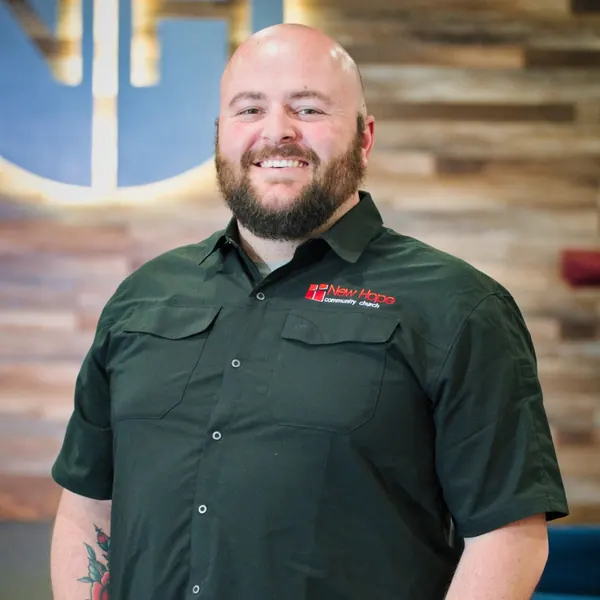
Kyle
Relph
Associate Pastor of New Hope Community Church.
Worship and pastoral care. Biola Cinema and Media Arts. Regularly leads worship and helps create a welcoming atmosphere for Sunday services. He also co-leads The Gathering, our college-age young adult community.
This message is part of The Psalms We Live, and it's one of the messages gathered on our grief support page, where you'll also find GriefShare's meeting schedule and a monthly lunch for anyone who has lost someone close.
You're welcome at New Hope.
All three Sunday services at 8, 9:30, and 11 AM are identical, same teaching and same worship, so come at the hour that works for you.
Get directions (opens Google Maps in a new tab)